
It’s 8:30 AM on a Tuesday. You sit down with your coffee, intending to focus on the high-level strategy that will actually move the needle this quarter. Instead, you open your browser to find fourteen tabs already screaming for attention.
There is a lead from last night sitting in a Gmail folder that hasn’t been added to the CRM. A project update is buried in a Slack thread, but the Trello board still says "In Progress." Your most talented project manager is currently spending their first two hours of the day copy-pasting data from a CSV file into a billing dashboard because the two systems refuse to speak to one another.
This is the "App Fatigue" tax. It is the invisible friction that turns a high-growth company into a sluggish bureaucracy. For the modern Operations Manager or Small Business Owner, the stress isn't just about having too much work; it's the realization that 40% of that work is "work about work", the manual movement of data that creates zero market value.
Why "Manual" is No Longer an Option in 2026
As we move through 2026, the margin for operational error has evaporated. We are currently facing a "triple threat" to business stability:
Labor Scarcity: The cost of high-tier talent has plateaued at a premium, making it fiscally irresponsible to use human cognitive cycles for data entry.
The Instant Gratification Economy: Lead decay now happens in minutes, not hours. If your data doesn't flow instantly from a lead magnet to a sales representative, that prospect has already moved on to a competitor.
Data Fragmentation: The average SMB now uses upwards of 15 different SaaS applications. Without a central nervous system, your data isn't an asset; it’s a liability spread across disconnected silos.
Traditional "brute force" scaling, hiring more people to manage the mess, is failing. True operational resilience now requires a fundamental shift in how we view the digital architecture of our businesses.
Strategic Integration of Workflow Automation Software
To bridge this gap, leadership must stop viewing "tools" as individual solutions and start investing in a holistic ecosystem. This is where workflow automation software transitions from a "nice-to-have" utility to a core strategic pillar.
When implemented correctly, workflow automation software acts as the connective tissue between your CRM, your communication tools, and your financial backend. It ensures that a trigger in one system (like a signed contract in DocuSign) creates an inevitable chain of events (generating an invoice, creating a Slack channel, and assigning a specialist) without a single human click.
By prioritizing workflow automation software, you aren't just saving time; you are creating "operational gravity." Processes happen because they are programmed to happen, not because a tired employee remembered to check a spreadsheet.
Expert Insight: The 80/20 Rule of Automation
Pro-Tip: Never automate a broken process. Before applying technology, audit your manual workflow for redundancies. If you automate a mess, you simply get a faster, more expensive mess. Aim to automate the 80% of repetitive tasks to free up your team for the 20% of high-value, empathetic problem-solving.
The Rise of the AI Employee for Business
There is a common misconception that digital transformation is a threat to the workforce. In reality, the opposite is true. The primary driver of burnout in 2026 isn't "hard work"; it’s "robotic work."
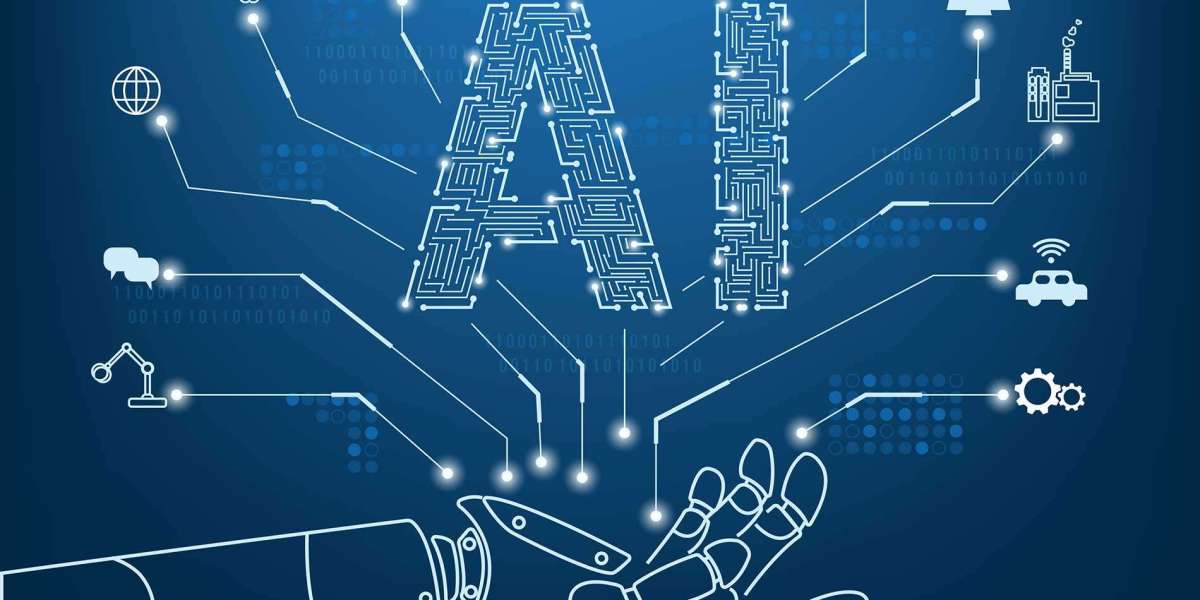
When you introduce an AI employee for business, you are effectively upgrading your staff's "top-of-license" capacity. An AI employee for business can handle the Tier-1 triage: answering basic client FAQs, scouring internal databases for documentation, and ensuring data integrity across platforms.
This shift has a profound impact on staff morale and retention. When employees are no longer bogged down by the "App Fatigue" of switching between 10 different windows to find one piece of information, they can focus on the creative and strategic work they were actually hired to do. Retention in 2026 is increasingly tied to the quality of the "Digital Employee Experience" (DEX). If your tech stack is frustrating, your best people will leave for a company that has its digital house in order.
Operational Workflow Comparison
Feature | Manual/Fragmented Workflow | Automated/Integrated Workflow |
Data Entry | Manual copy-paste; high risk of "fat-finger" errors. | Instantaneous API-based syncing. |
Lead Response | Delayed (1–4 hours); dependent on human availability. | Instant (under 2 minutes) via automated triggers. |
Cross-App Visibility | Staff must log into multiple apps to find the "truth." | Single source of truth via a centralized dashboard. |
Scalability | Linear (Must hire more people to handle more volume). | Exponential (Systems handle volume; humans handle exceptions). |
Error Rate | 5–10% due to human fatigue. | < 0.1% based on logic-driven rules. |
The Technical Deep-Dive: Interoperability and System Integrity
For IT Directors and CTOs, the conversation around digital transformation often centers on "Interoperability." It is no longer enough for a software to have a "good UI." In 2026, the value of a tool is measured by its API (Application Programming Interface) maturity.
Any new solution must be able to "talk" to your existing stack, whether that’s a legacy ERP, a modern CRM like Salesforce, or a project management tool like Monday.com.
Key Integration Standards to Demand:
RESTful APIs: For flexible, standardized communication between web services.
Webhooks: To ensure real-time data "pushes" rather than delayed "polling."
SOC2 & GDPR Compliance: As data flows automatically between systems, the security of that data "in transit" is as important as its security "at rest."
Low-Code Middleware: Utilizing platforms like Zapier, Make, or custom-built Python scripts to act as the "translator" between disparate data languages.
Ensuring your systems are interoperable prevents the "Frankenstein Stack," where updates to one software break the entire chain.
The Skeptic’s Corner: "Isn't Automation Just Adding More Complexity?"
A common myth among small business owners is that adding automation software is just adding "one more thing to manage."
While there is an initial setup phase, the goal of a strategic digital transformation is reduction, not addition. You are replacing five manual, disconnected steps with one automated sequence. Complexity is what you have right now: the mental load of remembering to follow up, the anxiety of wondering if an invoice was sent, and the "leaky bucket" of lost leads. Automation doesn't add complexity; it reveals the complexity you’ve been ignoring and handles it for you.
The Strategic Bottom Line
Digital transformation is not a destination; it is an operational standard. As we navigate the remainder of 2026, the gap between "automated" businesses and "manual" businesses will become a chasm.
Your Action Plan:
Map the Journey: List every step a lead takes from first click to final invoice.
Identify the "Friction Points": Where are people copy-pasting? Where are the 2-hour delays?
Pilot a Solution: Implement workflow automation software on one specific high-pain process (e.g., Lead Onboarding).
Empower the Team: Deploy an AI employee for business to handle the most repetitive internal queries.
The goal is simple: Build a business that runs on systems, so your people can run on vision.