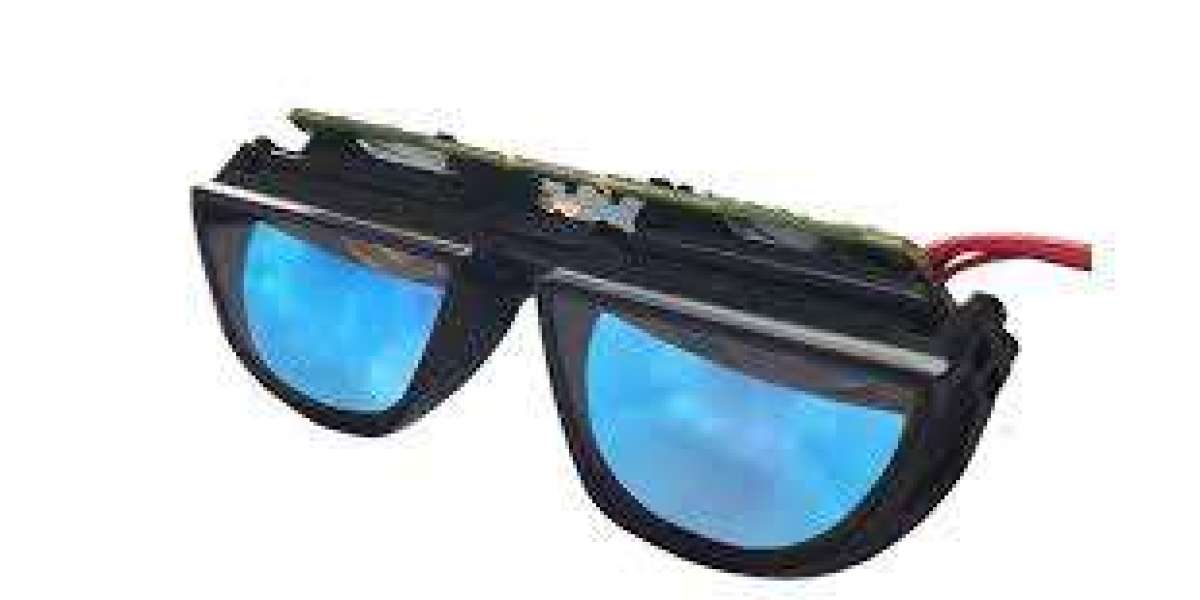

In the B2B augmented reality (AR) sector, we have reached a crossroads. We can build headsets with incredible field of view (FOV) and high resolution, but they often end up resembling bulky helmets rather than sleek eyewear. For OEMs and system integrators, the persistent challenge is finding the "Goldilocks zone": a display engine that is small enough for a stylish frame but powerful enough to remain visible in high-ambient light environments.
While waveguides are often hailed as the future, their low light efficiency and high manufacturing costs present significant barriers for mid-tier and consumer-entry devices. This is why the Bird bath optical module has emerged as the pragmatic solution for the current market. However, "pragmatic" does not mean "problem-free." Integrating these modules requires a deep understanding of light-path optimization and ghosting suppression.
The Problem: The Efficiency vs. Form Factor Trade-off
The core struggle when implementing a Bird bath optical module lies in the physics of its namesake structure. The design uses a beam splitter and a curved combiner (the "bowl") to reflect light into the user's eye. This introduces three primary technical hurdles:
Light Path Attenuation: In a standard configuration, light passes through the beam splitter twice. This can result in a theoretical light loss of up to 75% before the image reaches the eye. For B2B applications in bright industrial settings, this leads to "washout" unless a high-nit source is used.
The "Ghosting" Artifact: Internal reflections between the beam splitter and the corrective lenses can create secondary images or "halos." In high-contrast environments—such as white text on a dark background—this ghosting severely degrades text legibility and UI clarity.
Physical Depth (The Z-Axis Problem): While thinner than traditional optics, the "Bird bath" structure still requires a certain physical volume to allow the light to fold correctly. Minimizing this "nose-heavy" profile without narrowing the FOV is a constant battle for industrial designers.
Solving the Immersion Gap with Advanced Bird Bath Integration
To overcome these limitations, the industry is moving toward "Enhanced Bird Bath" architectures. By focusing on the synergy between the display source and the optical coatings, manufacturers can reclaim the performance lost to the physics of the fold.
1. Pairing with Micro OLED for Superior Contrast
The most effective way to combat light loss in a Bird bath optical module is to use a high-luminance Micro OLED as the image source. Because Micro OLEDs offer near-infinite contrast, the "black" levels in your AR interface remain transparent even when the display is pushed to high brightness levels. This creates a "floating" UI effect that feels integrated into the real world rather than a flat overlay.
2. Polarizing Beam Splitters (PBS) to Suppress Ghosting
To eliminate the dreaded ghosting effect, engineers are increasingly using Polarizing Beam Splitters. By controlling the polarization state of the light at each reflection point, we can ensure that "stray" light is absorbed or diverted away from the eye box. This results in a much sharper MTF (Modulation Transfer Function) and improved image crispness.
Technical Considerations: FOV and Eye Box Optimization
For B2B procurement, the value of a Bird bath optical module is measured by its "usability." A tiny eye box means the user loses the image if the glasses shift slightly on their nose—a failure for any field-service application.
Expanding the Eye Box: Through the use of customized aspheric combiners, modern modules can provide a generous eye box (typically 10x10mm or larger), ensuring the AR content stays visible even during movement.
Field of View (FOV) Scaling: Most Bird bath modules currently sit between 40° and 52° FOV. Increasing this requires larger combiners, which increases weight. The "sweet spot" for most B2B productivity apps is currently 45°, balancing immersion with a lightweight chassis.
Semantic Keywords for B2B SEO and Authority
To ensure this article reaches the engineers and decision-makers who need it, we must utilize the semantic keywords that define the optoelectronic ecosystem:
Beam Splitter Ratio: The balance between transmission and reflection (e.g., 50/50 vs. 40/60).
See-Through Transmittance: How much of the "real world" the user can see through the glasses.
Combiner Curvature: The precision-molded surface that determines the focal distance of the virtual image.
Optical Engine Footprint: The total cubic volume of the display and lens assembly.
By addressing these specific technical parameters, the content signals to search engines that it is a high-authority resource for professionals, rather than a general consumer overview.
Conclusion
Despite the rise of waveguides, the Bird bath optical module remains the most cost-effective and visually vibrant solution for the current generation of AR smart glasses. It provides a superior color gamut and brightness that waveguides struggle to match, all while maintaining a manufacturing yield that makes mass deployment feasible.
For B2B enterprises looking to deploy AR solutions today, the key is not waiting for a "perfect" futuristic tech, but mastering the integration of Bird bath optics to create a reliable, high-performance tool for the modern workforce.