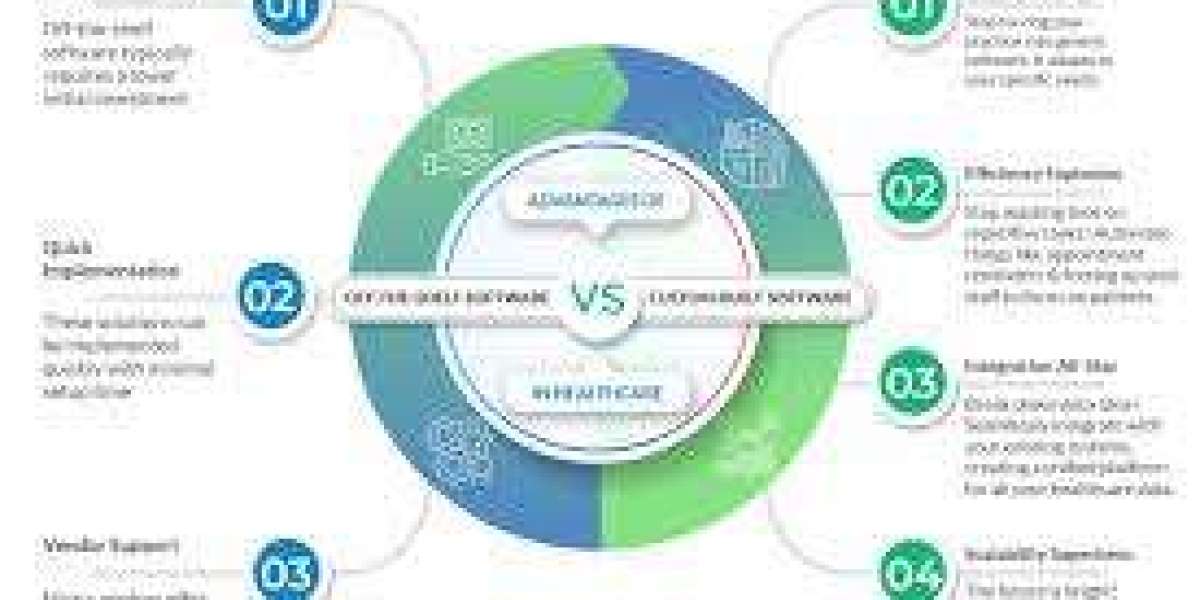

Healthcare organizations today face a critical technology decision: Should they invest in custom-built software tailored to their workflows, or choose an off-the-shelf solution that promises faster deployment and lower upfront costs?
It’s a question hospitals, clinics, startups, and digital health entrepreneurs ask every day. As an experienced healthcare software development company, we’ve guided organizations through both paths. The answer is rarely one-size-fits-all. Instead, it depends on your growth plans, compliance requirements, budget, and long-term vision.
In this comprehensive guide, we’ll explore the differences between custom and off-the-shelf healthcare solutions, the advantages and limitations of each, and how to determine the best fit for your organization. Whether you're launching a hospital management platform or working with a telemedicine application development company, understanding these options can save time, money, and operational headaches.
Understanding Off-the-Shelf Healthcare Solutions
Off-the-shelf software refers to pre-built solutions designed for mass use. These platforms are developed to serve a broad audience and come with standardized features that meet common healthcare needs.
Examples include:
· Ready-made EHR systems
· Practice management software
· Billing and claims processing tools
· Telehealth platforms
These systems are typically subscription-based and can be implemented quickly.
Advantages of Off-the-Shelf Solutions
1. Faster Deployment
Pre-built systems are ready to use, often requiring only configuration and minor customization. For organizations that need immediate implementation, this can be a major advantage.
2. Lower Initial Investment
Compared to custom development, upfront costs are generally lower. You pay licensing or subscription fees rather than development costs.
3. Proven Functionality
Many off-the-shelf platforms have been tested across multiple healthcare environments, offering reliability and predictable performance.
4. Vendor Support
Established vendors often provide maintenance, updates, and technical support.
Limitations of Off-the-Shelf Solutions
However, there are trade-offs.
1. Limited Customization
Healthcare workflows vary significantly between organizations. A pre-built solution may not align perfectly with your processes.
2. Integration Challenges
Interoperability with existing systems can be complex if the platform does not fully support industry standards like HL7 or FHIR.
3. Ongoing Subscription Costs
While initial costs are lower, recurring fees can become expensive over time.
4. Restricted Scalability
As your organization grows, the system may not adapt easily to new services or operational models.
What Is Custom Healthcare Software?
Custom healthcare software is built specifically for your organization’s needs. A professional healthcare software development company works closely with stakeholders to design, develop, and deploy a tailored system that fits unique clinical and operational workflows.
This approach is common among:
· Multi-specialty hospitals
· Digital health startups
· Telemedicine providers
· Remote patient monitoring companies
Custom development ensures full control over functionality, security, integrations, and user experience.
Advantages of Custom Healthcare Software
1. Tailored to Your Workflow
Every healthcare organization operates differently. Custom software aligns perfectly with your internal processes, reducing inefficiencies and manual work.
2. Full Regulatory Compliance Control
A specialized healthcare software development company ensures compliance is built into the architecture from day one—whether it’s HIPAA, GDPR, or regional health data laws.
3. Seamless Integrations
Custom platforms can be designed to integrate smoothly with:
· Laboratory systems
· Insurance portals
· Pharmacy management tools
· Wearable devices
· Third-party APIs
This is especially important when partnering with a telemedicine application development company to connect virtual consultations with EHR systems.
4. Scalability for Growth
Custom systems are built with your long-term vision in mind. As you expand services, add users, or integrate AI tools, the software evolves with you.
5. Competitive Advantage
For startups and private healthcare providers, custom software can differentiate your services in a crowded market. Unique patient experiences, AI-driven features, and personalized dashboards can become strategic assets.
Challenges of Custom Development
Transparency is essential when evaluating custom solutions.
1. Higher Initial Investment
Custom software requires upfront development costs. However, this is often offset by long-term savings and operational efficiency.
2. Longer Development Timeline
Building a solution from scratch requires planning, design, development, testing, and compliance checks.
3. Requires Expert Partnership
Success depends heavily on choosing the right healthcare software development company with domain expertise.
Telemedicine: A Special Consideration
The rise of virtual care has added another layer to this debate. When working with a telemedicine application development company, organizations must consider whether generic telehealth platforms can meet their specific needs.
Off-the-Shelf Telemedicine Platforms
These offer:
· Basic video conferencing
· Appointment scheduling
· Secure messaging
They are suitable for small practices or short-term use.
Custom Telemedicine Solutions
Custom platforms may include:
· AI-powered triage systems
· Integrated e-prescriptions
· Advanced remote monitoring
· Multi-language support
· Custom patient portals
For healthcare providers aiming to build a strong digital presence, custom telemedicine development often delivers better long-term value.
Cost Comparison: Short-Term vs. Long-Term
When comparing costs, many decision-makers focus only on upfront expenses. However, total cost of ownership tells a different story.
Off-the-Shelf Costs Include:
· Subscription or licensing fees
· Per-user charges
· Add-on modules
· Integration fees
Over five to seven years, these recurring costs can surpass custom development investments.
Custom Development Costs Include:
· Initial development
· Maintenance and updates
· Hosting and infrastructure
While higher initially, custom solutions often reduce dependency on external vendors.
Security and Data Control
Healthcare data is highly sensitive. Data breaches not only damage reputation but can lead to severe financial penalties.
With off-the-shelf platforms, your data may reside on vendor-controlled infrastructure. Custom software allows more flexibility in choosing secure hosting environments and implementing advanced security protocols.
A reputable healthcare software development company prioritizes:
· End-to-end encryption
· Multi-factor authentication
· Regular security audits
· Role-based access controls
User Experience Matters
Healthcare professionals operate in high-pressure environments. Clunky interfaces slow down workflows and increase burnout.
Off-the-shelf solutions must cater to broad audiences, which can result in generic interfaces. Custom development enables user-centric design based on real feedback from clinicians and patients.
When partnering with a telemedicine application development company, a seamless user experience can directly impact patient satisfaction and retention.
Innovation and Future-Readiness
Healthcare is rapidly evolving with AI, machine learning, blockchain, and IoT technologies.
Custom platforms are better positioned to integrate:
· Predictive analytics
· AI-driven diagnostics
· Automated documentation
· Remote patient monitoring
Off-the-shelf platforms may lag behind in adopting cutting-edge technologies or restrict customization.
When Off-the-Shelf Is the Right Choice
Off-the-shelf solutions may be ideal if:
· You are a small clinic with limited budget
· You need quick implementation
· Your workflows are standard
· You do not require extensive customization
They provide a practical entry point into digital healthcare transformation.
When Custom Development Is the Better Investment
Custom healthcare software makes sense if:
· Your organization has complex workflows
· You plan to scale significantly
· Data control is a top priority
· You aim to build a differentiated digital product
· You want long-term cost efficiency
A trusted healthcare software development company will conduct a thorough needs assessment before recommending the best path.
How to Make the Right Decision
Here’s a practical framework to guide your choice:
1. Define your long-term vision (3–5 years).
2. Assess regulatory requirements in your region.
3. Evaluate integration needs with existing systems.
4. Compare total cost of ownership, not just upfront price.
5. Consult experienced healthcare technology experts.
A transparent healthcare software development company should present both options objectively, helping you align technology with business goals.
Real-World Insight: Hybrid Approaches
In many cases, organizations adopt a hybrid strategy. They may start with an off-the-shelf solution to launch quickly, then transition to custom development as they grow.
Similarly, some healthcare providers integrate off-the-shelf billing tools with custom-built telemedicine platforms developed by a specialized telemedicine application development company.
Flexibility is often the smartest strategy.
Final Thoughts
The debate between custom and off-the-shelf healthcare software isn’t about which option is universally better—it’s about which one aligns with your organization’s needs, goals, and growth trajectory.
Off-the-shelf solutions offer speed and affordability. Custom software provides scalability, flexibility, and competitive differentiation.